Summarize and analyze this article with:

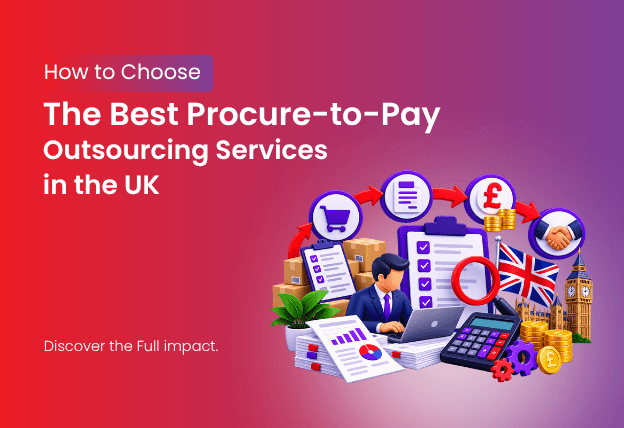
How to Choose the Best Procure-to-Pay Outsourcing Services in the UK
October 9, 2026
IMS Decimal Updates, Outsourced Accounting and Finance Services
The best procure-to-pay outsourcing services in the UK combine process expertise across the full cycle, technology that fits your existing systems, documented security and financial controls, scalable capacity, clear reporting and transparent pricing. Evaluating providers against these criteria, and against your own transaction volumes and workflows, is the most reliable way to choose a partner.
Managing procure-to-pay internally brings purchase orders, supplier data, invoice matching, approvals and payments into one connected cycle. Each handoff between teams and systems adds coordination effort as supplier numbers and invoice volumes grow. Procure-to-pay outsourcing, whether for the full cycle or selected parts of it, can give finance teams additional capacity and consistency, provided the partner is chosen with care.
Why Is Choosing the Right Procure-to-Pay Outsourcing Partner Important?
Procure-to-pay sits between operations and finance, so the partner’s work affects supplier relationships, cash flow and the accuracy of financial records at the same time. A well-matched provider applies consistent processes to purchase orders, invoices and payments, and gives finance leaders a clearer view of commitments and spend.
Because procure-to-pay outsourcing is usually a multi-year arrangement, the quality of selection matters more than the speed of onboarding. A structured evaluation protects the finance team’s time and maintains supplier confidence through the transition.
What Services Should a Procure-to-Pay Outsourcing Provider Offer?
Scope varies by provider. Procurement outsourcing services cover the purchasing side of the cycle, while accounts payable services cover the invoice-to-payment side, and a complete offering typically spans five areas.
Procurement and Purchase Order Management
Raising, approving and tracking purchase orders against budgets and approval limits, so spend is authorised before invoices arrive.
Supplier Onboarding and Vendor Data Management
Collecting, validating and maintaining supplier master data, including bank and tax details, which supports accurate payments and reduces duplicate vendor records.
Invoice Processing and Payment Management
Accounts payable outsourcing in this area covers capturing invoices, coding them to the correct accounts, and scheduling payments in line with agreed terms and cash-flow priorities.
Invoice Matching, Approvals, and Reconciliation
Matching invoices against purchase orders and goods receipts, routing exceptions to the right approver, and reconciling supplier statements to the ledger.
Supplier Query Management and Reporting
Handling supplier payment queries and producing reporting on spend, ageing and processing performance.
8 Factors to Consider When Choosing Procure-to-Pay Outsourcing Services
The factors below cover process expertise, technology, compliance, scalability, reporting and cost transparency. They can be used as a scoring framework when comparing providers side by side.
1. Assess End-to-End Procure-to-Pay Expertise
Ask whether the provider runs the full cycle or only invoice processing. Providers with experience across purchasing, matching, payment and reconciliation understand how a delay at one stage affects the next, and can advise on where handoffs should sit.
2. Review Industry Experience and Client Portfolio
Sector familiarity shapes how approvals, coding and supplier terms are handled. Ask for relevant examples, the volumes supported and the length of engagements, and speak with reference clients where possible.
3. Evaluate Automation and Technology Integration
Check compatibility with your ERP or accounting platform, and how the provider uses workflow, data capture and matching tools. The aim is consistent processing within your existing systems, not a parallel set of spreadsheets.
4. Verify Data Security and Financial Control
Supplier bank details and payment data need strong safeguards. Review certifications such as ISO 27001, access controls, segregation of duties, audit trails and data-protection practices aligned with UK GDPR.
5. Examine Invoice Exception and Supplier Query Handling
Exceptions are where process quality becomes visible. Ask how mismatches, missing purchase orders and duplicate invoices are routed, who owns resolution, and how quickly suppliers receive a response.
6. Compare Pricing Models and Overall Costs
Finance outsourcing services may be priced per invoice, per transaction band, per FTE or as a fixed fee. Compare on total cost, including implementation, exception handling, additional reporting and volume thresholds, so that like is compared with like.
7. Check Scalability and Service-Level Agreements
Confirm how capacity expands for peak periods or growth, and what the SLAs specify for processing turnaround, accuracy and query response. Escalation paths and service credits should be documented.
8. Assess Reporting Quality and Performance Visibility
Look for regular reporting on processing times, exceptions, ageing and spend, with a defined review cadence. Good visibility lets the internal team keep oversight while the provider handles execution.
Which KPIs Help Measure Procure-to-Pay Outsourcing Performance?
Agreeing a small set of measures at the start gives both sides a shared view of performance.
Invoice Processing Time and Accuracy
Time from receipt to posting, and the share of invoices processed without correction, indicate whether the process is stable.
First-Time Match Rate and Exception Resolution
The proportion of invoices that match without intervention, and how long exceptions take to clear, show where process or data issues sit.
Cost per Invoice and On-Time Payment Rate
Cost per invoice supports like-for-like comparison over time. On-time payment rate reflects supplier relationships and cash discipline.
Supplier Query Resolution and Service-Level Compliance
Response and resolution times for supplier queries, alongside adherence to agreed SLAs, show the day-to-day service experience.
How Can You Prepare Your Business for Procure-to-Pay Outsourcing?
Preparation shortens the evaluation and makes provider proposals directly comparable.
Map Existing Procurement and Accounts Payable Workflows
Document how requisitions, purchase orders, receipts, invoices and payments move today, including approvers and systems involved.
Define Transaction Volumes and Process Requirements
Gather monthly invoice and purchase order volumes, supplier counts and the share of invoices that raise exceptions, so providers can scope accurately.
Establish Technology, Compliance, and Integration Needs
List the systems, data-protection requirements, audit expectations and integration points the provider will need to work within.
Set Transition Goals and Performance Benchmarks
Agree baseline measures and target improvements, along with a phased transition plan and clear ownership on both sides.
What Mistakes Should You Avoid When Selecting a Procure-to-Pay Outsourcing Provider?
Most selection issues are avoidable with a clear framework in place before conversations begin.
Choosing Price Over Service Quality
The lowest quote may exclude exception handling or reporting. Comparing scope and total cost alongside price gives a more reliable picture of value.
Overlooking Technology Compatibility and Data Security
Integration and security reviews are far easier before contracting than after. Involving IT and information security early keeps the evaluation efficient.
Ignoring Exception Management and Supplier Communication
Supplier experience depends on how queries are handled. Confirm ownership, response times and communication channels in advance.
Failing to Define KPIs and Contractual Responsibilities
Clear KPIs, defined responsibilities and a review cadence in the agreement help both parties manage performance objectively.
How Can IMS Decimal Support Your Accounting Operations?
IMS Decimal is the finance and accounting operations business of IMS Group, with 20+ years of industry experience supporting organisations as an extension of their internal finance teams. Its finance and accounting outsourcing services support procure-to-pay on the finance side of the cycle.
Streamline Accounts Payable and Receivable Processes
Accounts payable outsourcing covering invoice processing, invoice auditing and validation, reconciliation and supplier query handling, alongside outsourced accounts receivable services such as credit control and receivables support, applied through defined workflows.
Improve Operational Efficiency Through Outsourced Finance Support
Taking on routine transaction volumes lets internal teams focus on analysis, supplier strategy and control. IMS Decimal’s published figures cite 99.7% transaction accuracy and an error rate below 1% in quality accounting.
Build Scalable Finance Operations Around Business Needs
Flexible contracts, SLA-driven workflows and 24/7 operations from delivery centres in India and the Philippines, supported by ISO 27001:2022 certification and documented security controls.
Key Takeaway: Choosing a Procure-to-Pay Partner for Long-Term Value
Choosing a procure-to-pay partner is a decision about the long-term operating model, not only price. Providers that show process depth across the cycle, fit with existing technology, documented security, scalable capacity, clear reporting and transparent pricing tend to deliver steadier results. Preparing workflows, volumes and KPIs before approaching the market makes comparison simpler and conversations more productive.
For UK organisations comparing finance outsourcing services, IMS Decimal supports the accounts payable and receivable processes at the centre of procure-to-pay.
Frequently Asked Questions
What Should You Look for in a Procure-to-Pay Outsourcing Provider?
Process expertise across the full cycle, compatibility with your technology, documented security and financial controls, scalable capacity with clear SLAs, regular reporting and transparent pricing.
How Much Do Procure-to-Pay Outsourcing Services Cost in the UK?
There is no single rate. Cost depends on invoice and purchase order volumes, supplier numbers, scope, systems and service levels, and is commonly structured per invoice, per transaction band, per FTE or as a fixed fee. Request a quote based on your actual volumes and compare total cost rather than unit price alone.
Which Processes Can Be Outsourced in the Procure-to-Pay Cycle?
Procurement outsourcing services can cover purchase order management and supplier onboarding, while accounts payable services cover invoice capture and processing, matching and approvals, payment preparation, reconciliation, supplier queries and reporting. Many businesses outsource the transactional steps and retain approval authority and strategic sourcing.
How Can P2P Outsourcing Improve Accounts Payable Efficiency?
Accounts payable outsourcing brings standardised workflows, defined exception routes and dedicated capacity, which reduce manual handling and processing time, improve accuracy, and give clearer visibility of ageing and payments.
How Long Does Procure-to-Pay Outsourcing Implementation Take?
Timelines vary with scope, the number of systems involved, supplier volumes and data readiness. A phased transition with agreed milestones gives a realistic plan, and a provider should set out a timeline as part of its proposal.