Summarize and analyze this article with:


How Structured Collections Improve Financial Stability of Senior Living
February 13, 2026
IMS Decimal Updates, Outsourced Accounting and Finance Services
Financial stability is a cornerstone of senior living operations, from independent living to assisted care, communities face unique challenges in maintaining steady revenue while delivering high-quality care. For care homes and senior living operators, financial pressure is not limited to expenses alone.
Revenue leakage caused by delayed billing, uncollected balances, and inefficient accounts receivable processes directly impacts financial stability. In such an environment, finance managers and accounting leaders have to view structured collections as a controllable lever to improve cash flow, reduce bad debt, and stabilise operating margins without compromising resident experience.
Let’s understand how disciplined accounts receivable and collections frameworks influence the financial structure of a senior living facility, and why it is critical for sustainable financial performance.
Understanding the Financial Challenges of Senior Living Facilities
Whether managing independent living senior living, assisted living, or income-based senior living communities, operators must balance affordability with financial viability. The senior living cost reflects a complex operational model that includes:
- Staffing and clinical labour expenses
- Property maintenance and utilities
- Regulatory and compliance overhead
- Insurance and risk management
- Administrative and financial operations
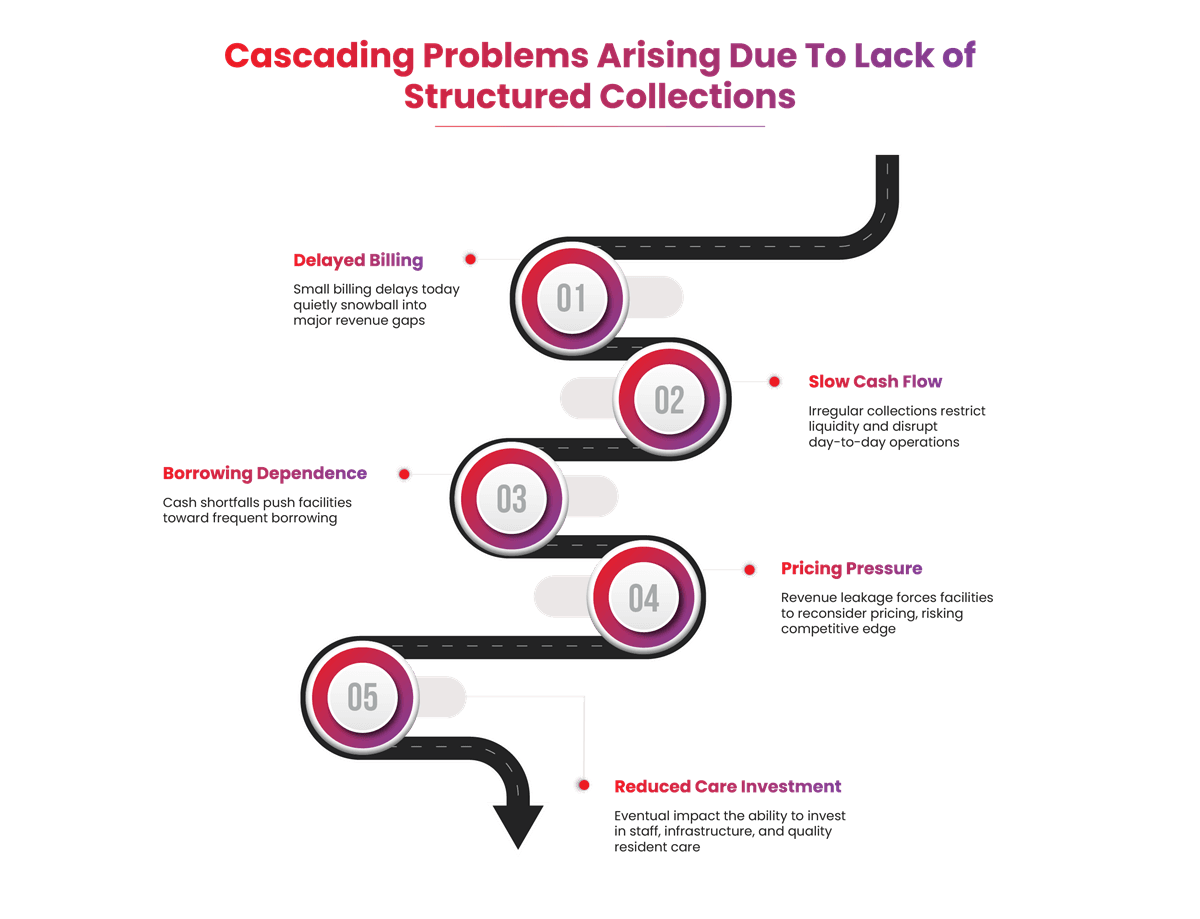
When collections processes are fragmented or manual, revenue delays amplify cost pressures and restrict reinvestment in care quality and facility operations.
What Is Meant by Accounts Receivable in Senior Living?
Accounts receivable, for senior living facilities, refers to outstanding payments owed by residents, families, insurers, or government programmes for services already delivered.
Common Receivables in Senior Living
- Monthly rent for senior living apartments
- Care and service fees
- Insurance reimbursements
- Medicaid or other programme-related payments
Key AR metrics Include
- Accounts receivable turnover
- Aging beyond 60 and 90 days
- Write-offs and adjustments
Understanding what are accounts receivable and managing them with precision is essential for reducing dependency on credit lines and maintaining liquidity. While it is equally important to understand accounts payable and how it can improve vendor trust over time.
Direct vs Indirect Taxes in International Care Models
When US care groups expand globally, they often focus on Direct Tax (Corporate Income Tax). However, Indirect Tax exposure often escalates faster.
Direct Taxes apply to profit. If you aren’t profitable yet, your liability is low.
Indirect Taxes apply to revenue/transactions. Even if your international branch is operating at a loss, you may still owe significant VAT or Sales Tax on every invoice issued.
For example, a care group may operate profitably while still accumulating unreported VAT or sales tax liabilities due to misclassified services or unregistered supplies. Because indirect taxes are embedded in pricing and invoicing, errors can cascade across multiple reporting periods before detection.
Why Structured Collections Matter to Senior Living Operators?
Be it a low cost senior living facility or a luxurious one, it becomes harder to sustain, as financial discipline starts acting like a competitive differentiator. Operators that manage receivables effectively can maintain affordability while preserving margins.
Aspects Structured Collections Can Directly Influence
- Operating cash flow
- Cost control
- Financial predictability
- Long-term sustainability
In the current paradigm, senior living finance leaders, this is no longer an operational detail but a strategic imperative.
Impact on Financial Management and Strategic Decisions
Through efficient collections, there are area which can have impact on strategic decision making and financial structure of senior living facilities:
Improvement Area | Financial Impact |
Faster collections | Reduced working capital gaps |
Lower bad debt | Less pricing pressure |
Predictable cash flow | Stable resident fees |
Lower admin costs | Improved margins |
How Structured Collections Improve Financial Stability?
Through transparent billing and predictable communication, senior living facilities can reduce disputes and confusion. It is crucial to note that financial stability and resident satisfaction are directly linked in senior living operations.
Faster Cash Flow and Predictable Revenue
Structured collections standardise invoicing, payment reminders, and follow-ups. This directly improves accounts receivable turnover, enabling operators to collect faster and forecast cash inflows with greater accuracy.
Improved liquidity reduces reliance on external financing and stabilises monthly operating budgets.
Lower Bad Debt and Write-Offs
Consistent aging analysis and early intervention reduce delinquency. Clear escalation protocols ensure balances do not accumulate beyond recoverable thresholds.
This approach is especially critical for income based senior living, where payment sources are diverse and often delayed.
Reduced Administrative Costs
Automated workflows and outsourced AR management reduce manual effort and rework. Finance teams can redirect focus toward financial reporting, compliance, and cost optimisation rather than chasing payments.
Lower administrative overhead directly contributes to controlling the overall cost of senior living.
Improved Compliance and Audit Readiness
Structured collections enforce documentation standards, approval controls, and reconciliation processes. This strengthens audit trails and supports compliance with US regulatory and reporting requirements.
Additionally, it allows CFOs to oversee multi-facility portfolios and focus further on international expansion while keeping in mind the tax compliances that care home facilitators could expect. This consistency adds up and is critical for consolidated financial reporting.
The Role of Outsourced AR and Collections in Senior Living
Many of the best senior living facilities adopt outsourced accounts receivable and collections models to achieve scale, control costs, and access specialised expertise.
What To Look for in an Experienced Outsourcing Partner
- Standardised AR processes tailored to senior living
- Technology-enabled billing and collections workflows
- Real-time visibility into receivables and aging
- Compliance-aligned reporting for US regulations
Resultantly, outsourcing services like accounts receivable transforms them from a reactive function into a strategic financial asset.
Conclusion: Ensuring Financial Stability for Senior Living with IMS Decimal
The financial stability of senior living facilities is not driven by care expenses alone. Often, revenue leakage from inefficient collections silently raises costs and threatens affordability.
By adopting structured collections and outsourcing professional AR management to trusted partners like IMS Decimal, senior living operators can improve financial stability, protect margins, and deliver sustainable care models for the long term.
With deep expertise in finance operations, an outsourced accounting expert enables leadership teams to reduce revenue leakage, improve accounts receivable turnover, lower the effective cost of senior living operations, and gain real-time financial visibility.
Talk to IMS Decimal to evaluate how structured collections can support financial stability across senior living portfolios.
FAQs
1. What is meant by accounts receivable in senior living facilities?
Accounts receivable refers to unpaid balances owed for rent, care services, and reimbursements from residents, families, insurers, or government programmes.
2. How does accounts receivable turnover affect senior living finances?
Higher turnover improves cash flow, reduces borrowing needs, and lowers administrative and financing costs.
3.How does outsourced AR help in improving structured collections?
Outsourced AR improves structured collections by implementing standardized processes, consistent follow-ups, and data-driven.